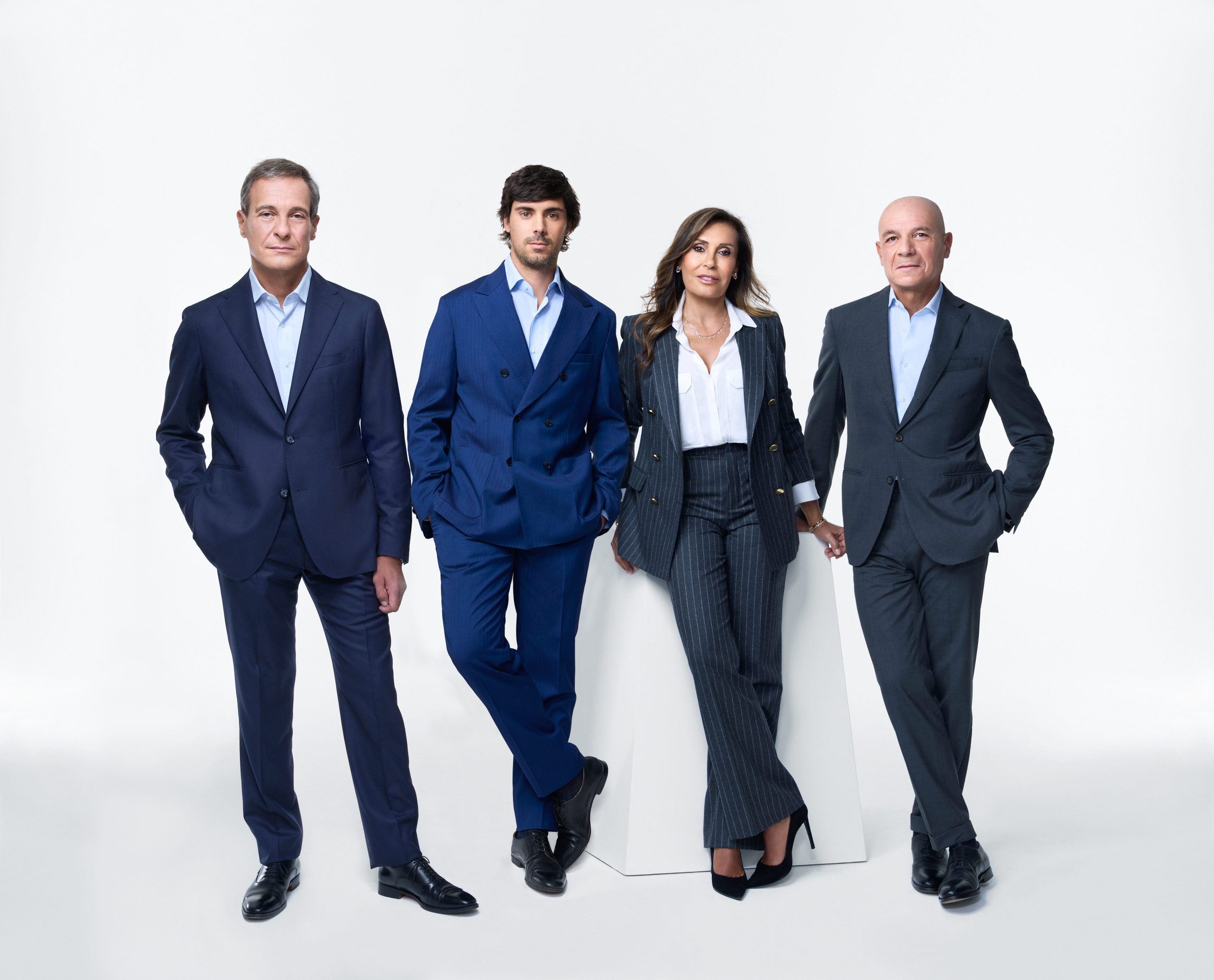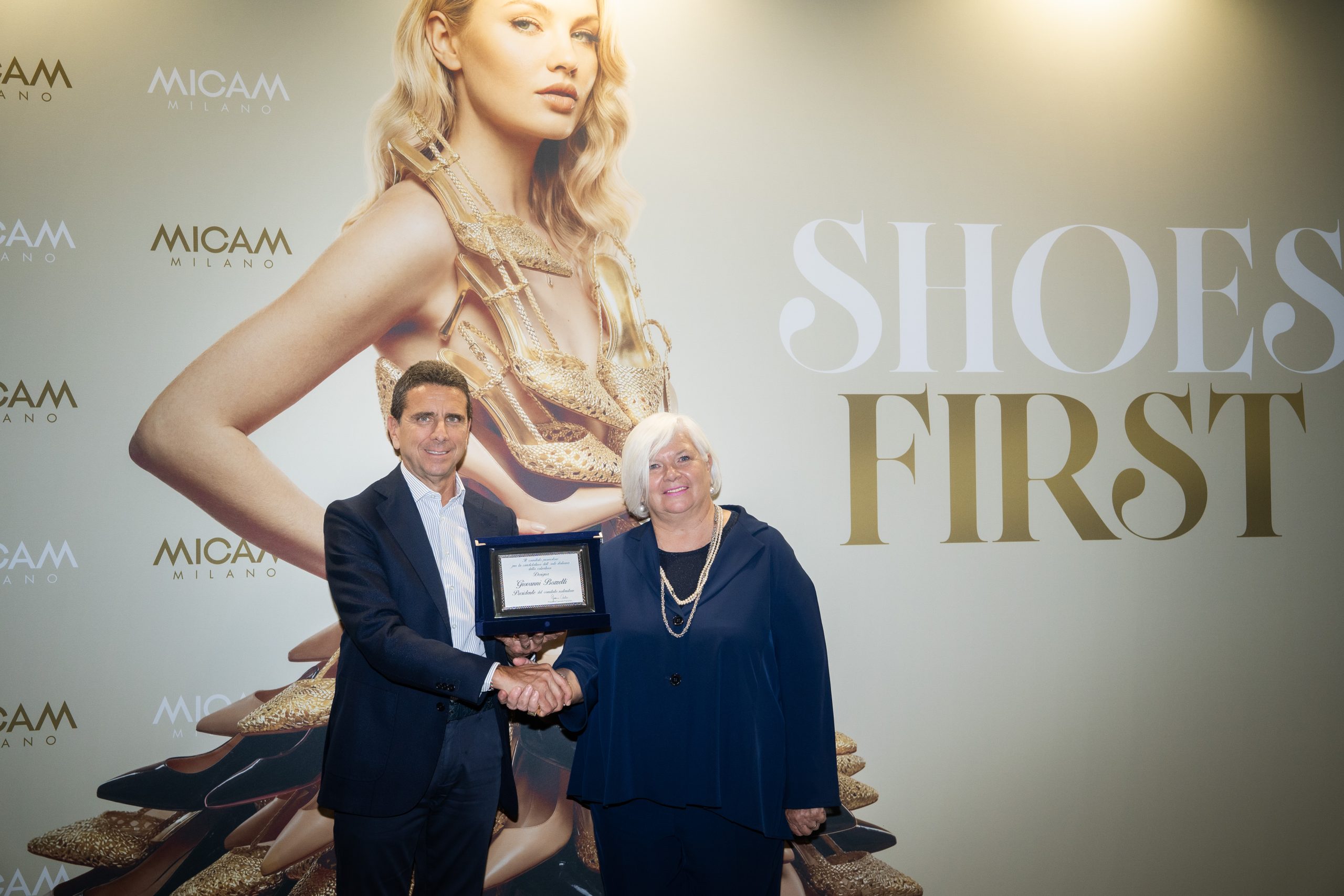
Featuring a photo of Bozzetti, president of Fondazione Fiera Milano, and Ceolini, president of MICAM and Assocalzaturifici It’s not just a matter of product. Behind an Italian shoe there are gestures, skills, territories, knowledge passed down, and a culture of craftsmanship that spans generations. It is from this awareness that yesterday, September 13th, the 102nd edition of MICAM Milano started at Rho Fiera Milano, inaugurated in the sign of the cultural heritage of Italian manufacturing. This heritage does not only belong to the past. On the contrary, it continues to live in companies, in production districts, and in the people who every day transform artisanal and industrial knowledge into products, facing innovation, new markets, and profound transformations of the fashion system.
Manufacturing as culture
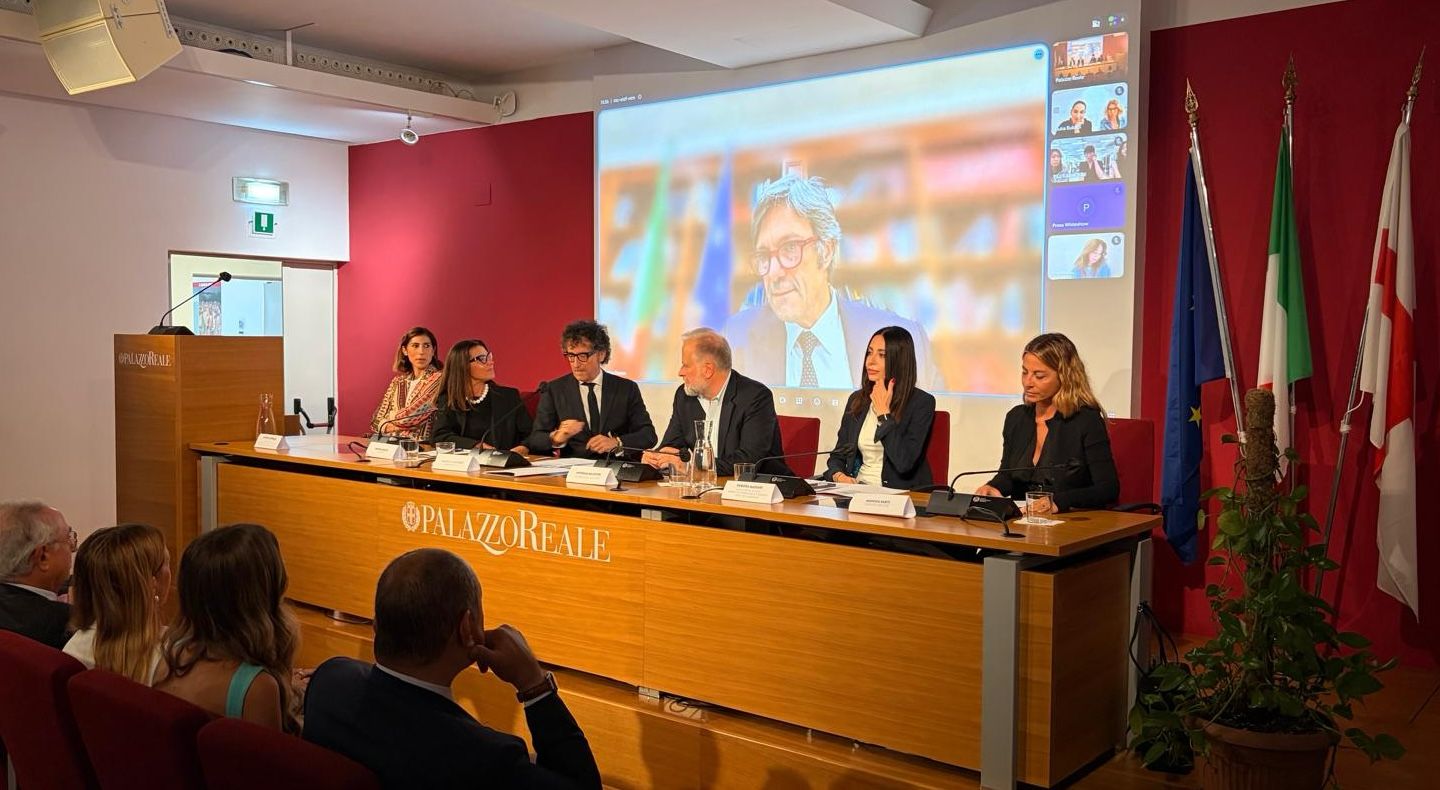
The chosen theme for the opening – “The cultural heritage of Italian manufacturing: collective wisdom that becomes a product” – thus focuses on an increasingly relevant question: how do you preserve knowledge without making it static? The answer lies in the ability to make tradition and innovation dialogue. And this is precisely the field in which MICAM moves, an international event dedicated to footwear and a privileged observation point on the transformations of the industry. The inauguration took place inside Fashion Link Milano, the project that brings together MICAM Milano, MIPEL, Milano Fashion&Jewels, TheOneMilano, and SIMAC Tanning Tech. Five events that connect complementary worlds of fashion, accessories, and technology, creating an ecosystem where product, skills, and market meet. During the ceremony, messages from the Vice President of the Council Antonio Tajani and the Minister of Enterprises and Made in Italy Adolfo Urso were also read, reaffirming the role of fashion as a strategic component of Italian manufacturing and as an expression of the know-how that continues to support the strength of national exports. Institutional greetings were given by Elena Buscemi, President of the Milan City Council. The ceremony concluded with the ribbon cutting of the five events that make up Fashion Link Milano.
Not just a shoe, but everything behind it
However, the most significant moment of the opening concerned the candidacy process of Italian Art of Footwear as Intangible Cultural Heritage of UNESCO, promoted by Assocalzaturifici and President Giovanna Ceolini, who also leads MICAM Milano. The project stems from a specific perspective: the value to protect is not only that of the finished object, but above all the set of knowledge, techniques, practices, and skills that allow its realization. This is an important distinction. Because while a shoe can be preserved, photographed, or exhibited, the knowledge necessary to make it risks being lost if not transmitted. The UNESCO path therefore looks at the territories, companies, and generations that have built over time one of the most recognizable expressions of Made in Italy. Developing the theme were Davide Rampello, university professor of arts and crafts, and Carlo Cambi, journalist and writer. Also speaking during the meeting was Elena Lorenzini, Deputy Chief of Staff of the Ministry of Enterprises and Made in Italy. An additional step was taken with the appointment of Giovanni Bozzetti, President of Fondazione Fiera Milano, as the President of the Supporters Committee for the UNESCO Candidacy of Italian Art of Footwear.
The future of Made in Italy lies in transmission
The point today is not simply to celebrate a tradition. It is to understand how to make it contemporary.
“Manufacturing heritage is not just what we have inherited, but what we are able to transmit and evolve,” emphasized Giovanna Ceolini, President of MICAM and Assocalzaturifici.
The UNESCO path, she explained, arises from the desire to recognize the value of skills and knowledge still alive in territories and companies, called to face the market, innovation, and new generations. A perspective shared by Giovanni Bozzetti, President of the Supporters Committee, according to whom the candidacy represents a national project to protect and enhance one of the most authentic know-hows of Made in Italy. The phrase that best summarizes this vision is perhaps his: “We are not nominating a shoe, but the people, the skills, and the techniques” that for generations have transformed Italian craftsmanship into culture. Here is where the theme of heritage also becomes a matter of the future. Because safeguarding a skill means creating the conditions for it to continue to be learned, reinterpreted, and used. It means ensuring that tradition does not become a photograph of the past, but a productive and cultural resource still capable of generating value.
MICAM opens a new season
With yesterday’s opening, the September edition of MICAM Milano officially begins, along with the new appointment of Fashion Link Milano. Five events, as many sectors, and a single increasingly interconnected supply chain: fashion, footwear, accessories, and technology meet at Fiera Milano in a moment where Made in Italy is called not only to compete in international markets but also to tell what makes it recognizable. And the message that emerged from the opening of MICAM is clear: the true heritage of Italian manufacturing is not just what it produces, but the knowledge that makes it possible to produce it. It is this knowledge – human, territorial, and collective – that MICAM is now shining a spotlight on.