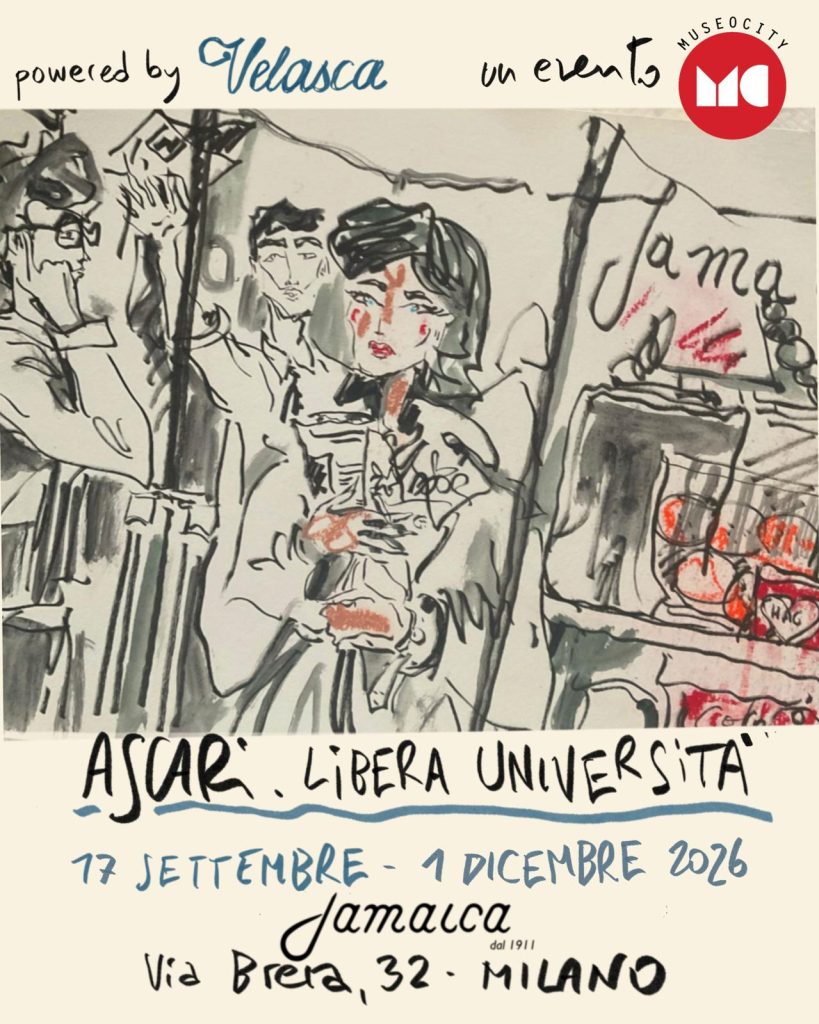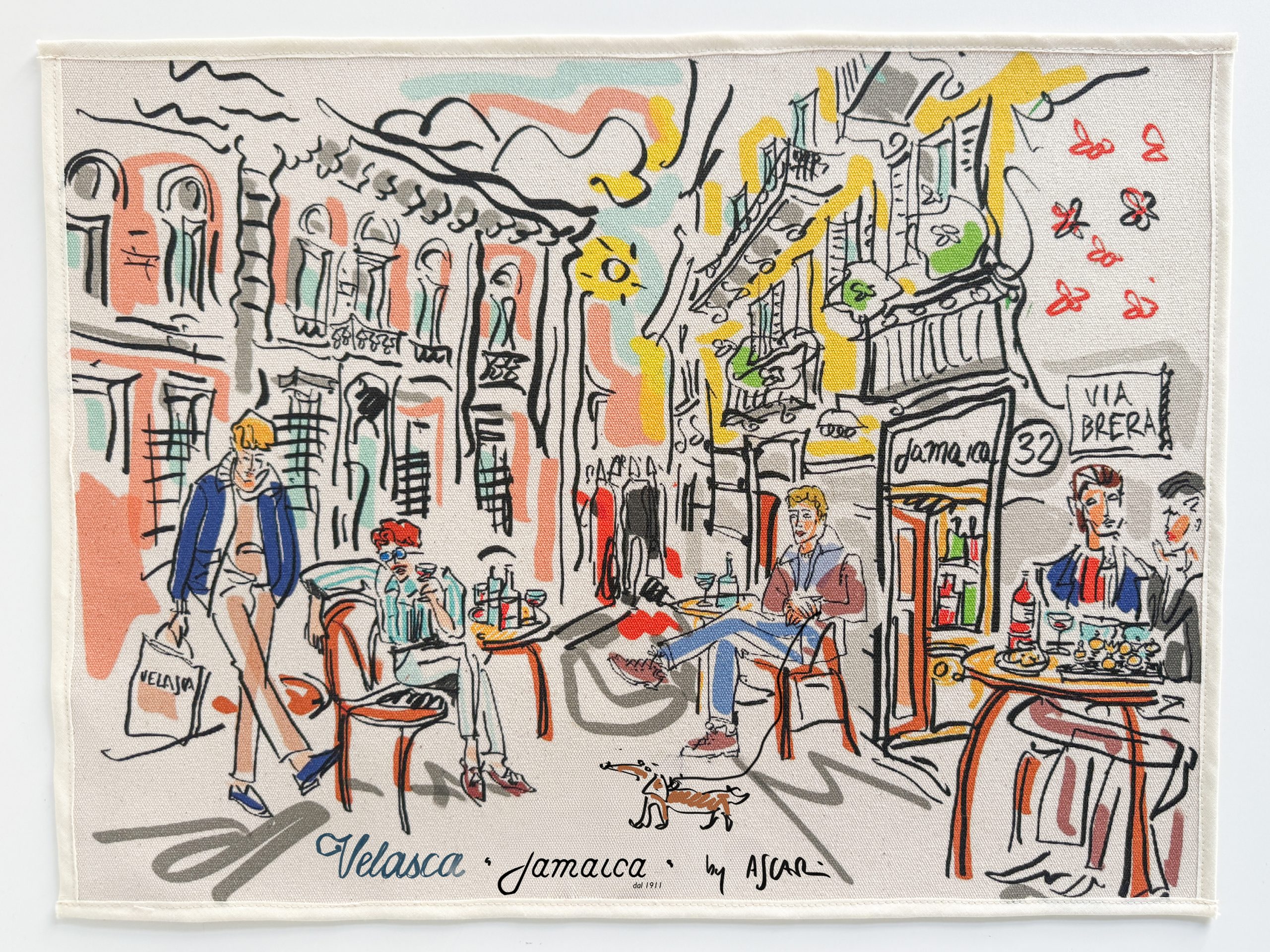
There are places that do not need to be called museums to preserve the memory of a city. The Bar Jamaica is one of these. In the heart of Brera, at via Brera 32, since 1911 Jamaica has been much more than a bar. It has been an address, a meeting point, a small informal university where artists, writers, musicians, photographers, and intellectuals have shared tables, ideas, discussions, and visions. Now that memory comes back to life through the work of Jacopo Ascari, a Milanese illustrator capable of looking at the city with a contemporary and nostalgic gaze. From September 17 to December 1, 2026, Jamaica hosts “Free University”, a project that starts from an everyday and almost invisible object, the paper placemat, to transform it into a narrative surface.
A placemat, a city
It is on the small round tables of the famous outdoor area that, over the decades, a part of Milan’s cultural imaginary has been built. Ascari takes those placemats and transforms them into small maps of memory. Portraits, interior details, glimpses of Brera, architectures, objects, and fragments of life come together in original compositions that do not simply seek to reconstruct the past. The goal is to evoke it. Next to real characters, there are what Ascari defines as “metaphysical memories”: images and suggestions that give back the atmosphere of a place more than its chronicle. It is a Milan made of streets, cafes, conversations, and nights. A creative, irregular, curious Milan. A Milan that at Jamaica has found, for generations, one of its natural addresses.
The Free University of Jamaica
The list of names that have passed through Jamaica almost seems like an out-of-catalog university program. There are Piero Manzoni and Lucio Fontana, Alberto Arbasino and Luciano Bianciardi, Joe Colombo and Ettore Sottsass, Ugo Mulas and Alfa Castaldi. And also Dario Fo, Mariangela Melato, Enzo Jannacci, Gino Paoli, Paolo Tomelleri, and Ornella Vanoni. Artists and intellectuals belonging to different worlds, but united by the same idea of Milan: a city capable of putting disciplines, people, and languages in dialogue. “Free University” is born precisely from this idea. Not an exhibition about nostalgia, but a project about creative freedom.
“Make way for ideas, creativity, and all those who have the courage and talent to express them. Through art, words, music. Jamaica, here in the heart of Brera, is full of history and stories, but also of imaginary worlds and artist utopias, it is an ideal and at the same time concrete space of freedom. It welcomes everyone, like a home, but with doors always open facing the street.” – Micaela Mainini, owner of Jamaica.
Milan, back at the center
To make the project even more contemporary, there is Velasca, a Milanese brand born in 2013 with a specific vocation: to tell Italian craftsmanship through a direct relationship with those who choose its products. The brand has chosen to support Ascari’s project starting from a very Milanese harmony: that between tradition and contemporaneity.
“Jacopo Ascari’s style has won us over: his gaze on the city, capable of telling its soul with a new perspective, deeply linked to its roots,” explain Jacopo Sebastio, founder of Velasca, and Ludovico Bertè, creative brand director.
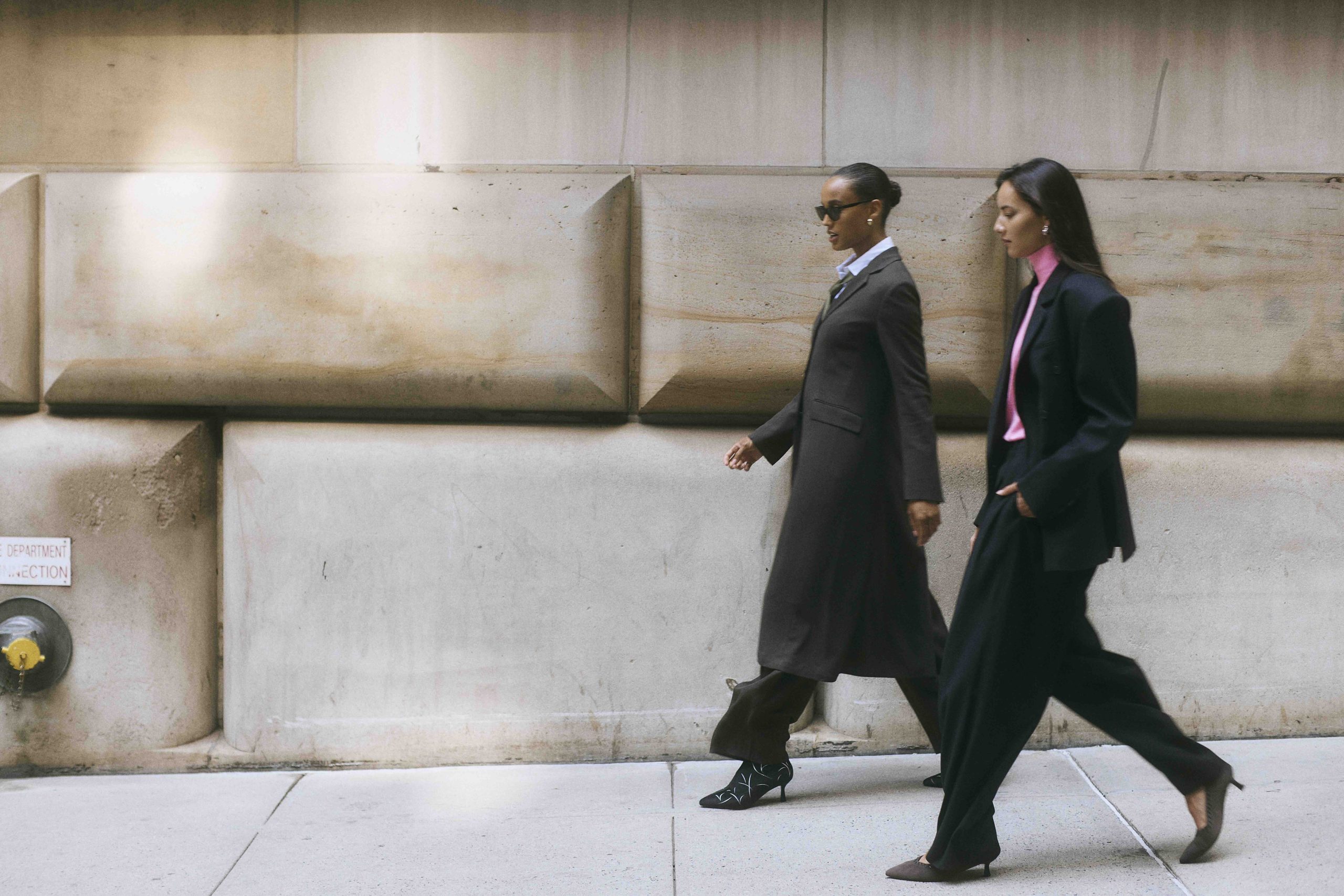
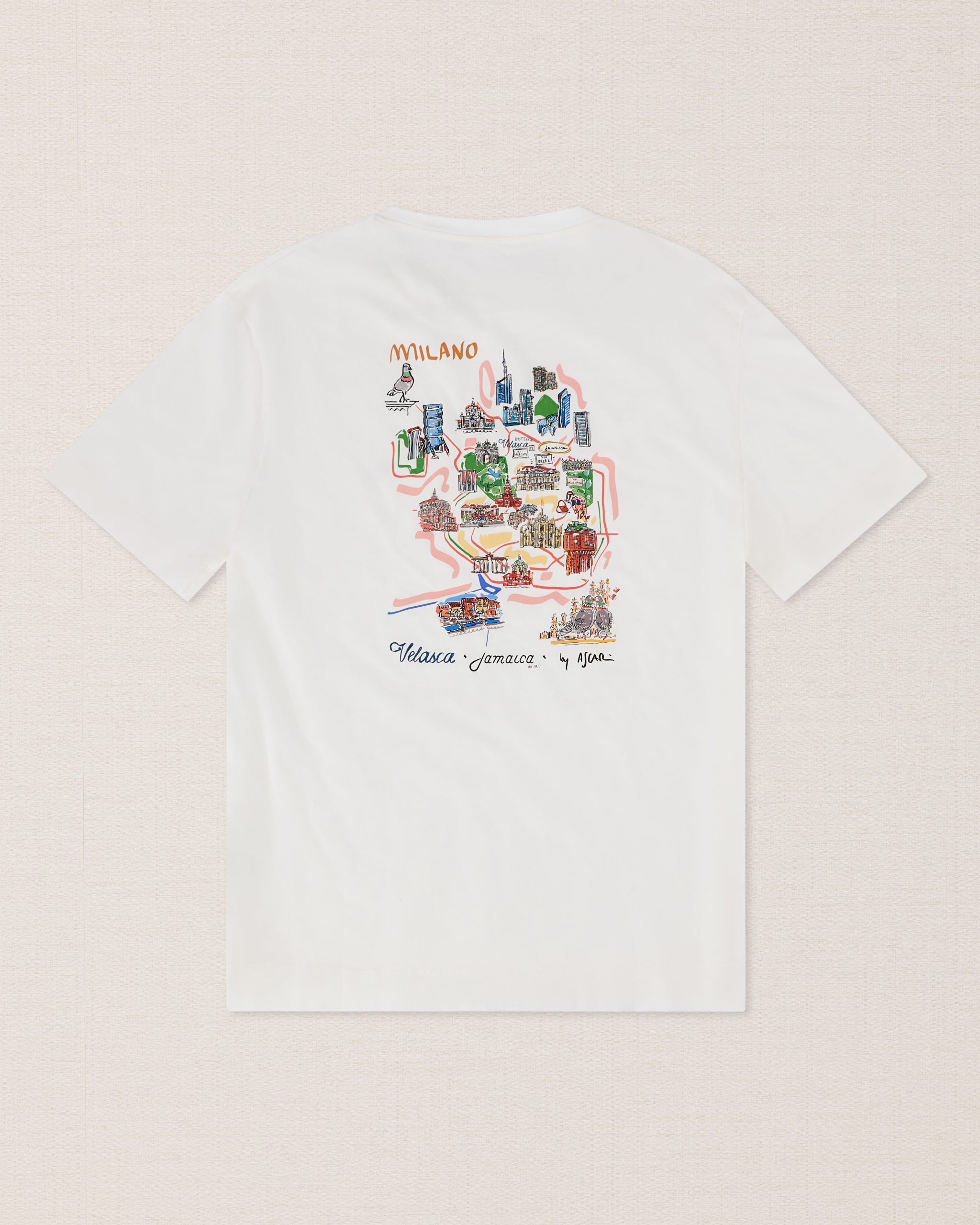
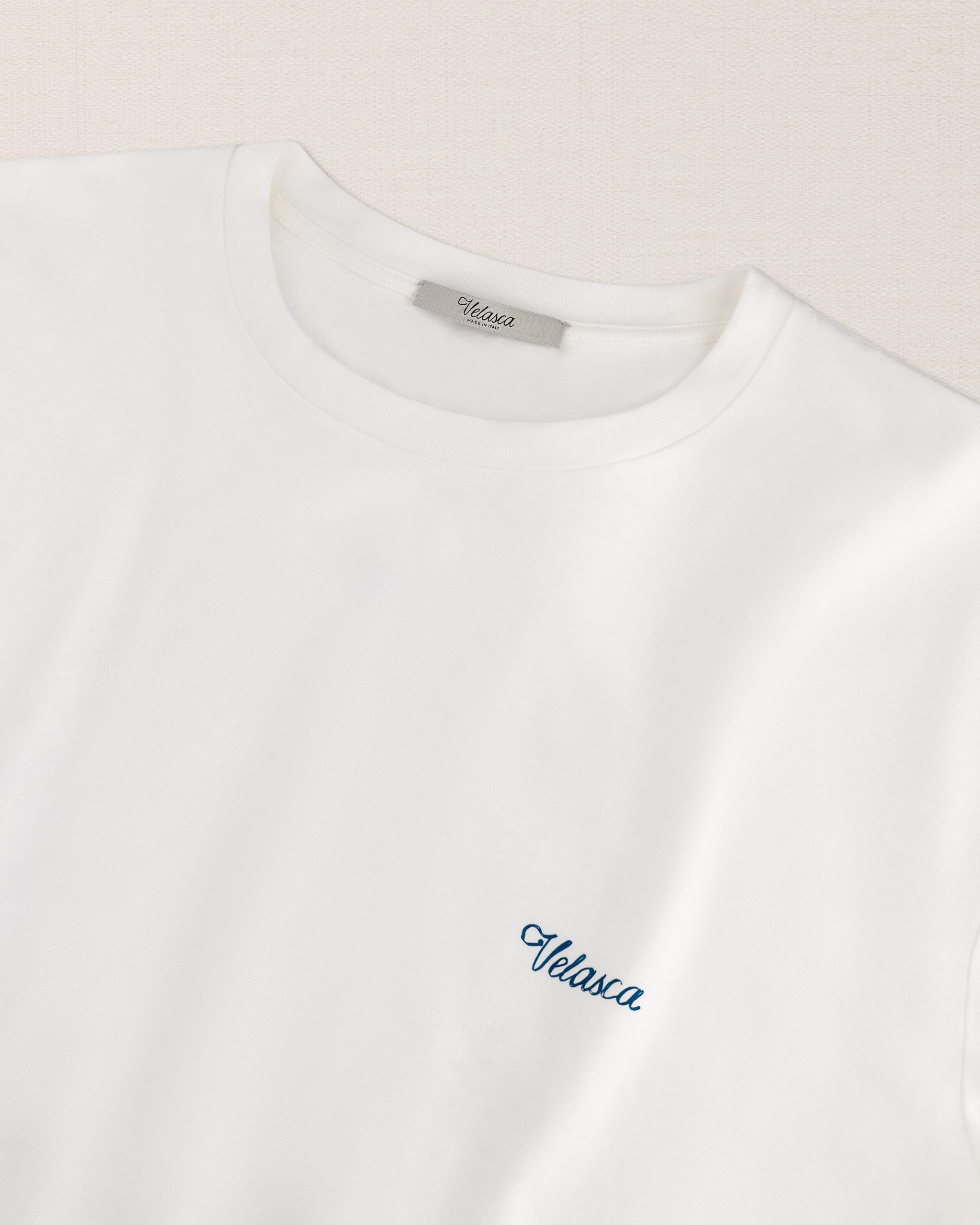
The result is a collaboration that goes beyond the exhibition. On the occasion of the September 16 vernissage, Velasca will present a capsule collection signed together with Ascari and Jamaica since 1911. T-shirts, fabric placemats, and a set of coffee cups will enter limited edition in the brand’s Milanese stores. Memory, this time, is not just to be looked at. It can be worn. It can be set. It can be taken home.
An exhibition that starts from the bar and returns to the city
Supporting the initiative is also MuseoCity, an association committed to enhancing Milanese and national museum heritage and creating connections between cultural institutions, museums, archives, and foundations. A relationship already consolidated: in recent years, MuseoCity has entrusted Jacopo Ascari with its communication campaign. On the occasion of “Free University”, the association will amplify the project through its channels and include the exhibition in the Milanese cultural calendar. The circle, thus, closes. It starts from a bar. It passes through art. It meets fashion, design, photography, music, and literature. And it returns to Milan. Because the true subject of “Free University” is not just Jamaica. It is a city that continues to produce culture when people sit at the same table. And perhaps this is the most contemporary idea of the project: to remind us that some of the most important things can still arise from a conversation, a chance encounter, a coffee. Or from a placemat.