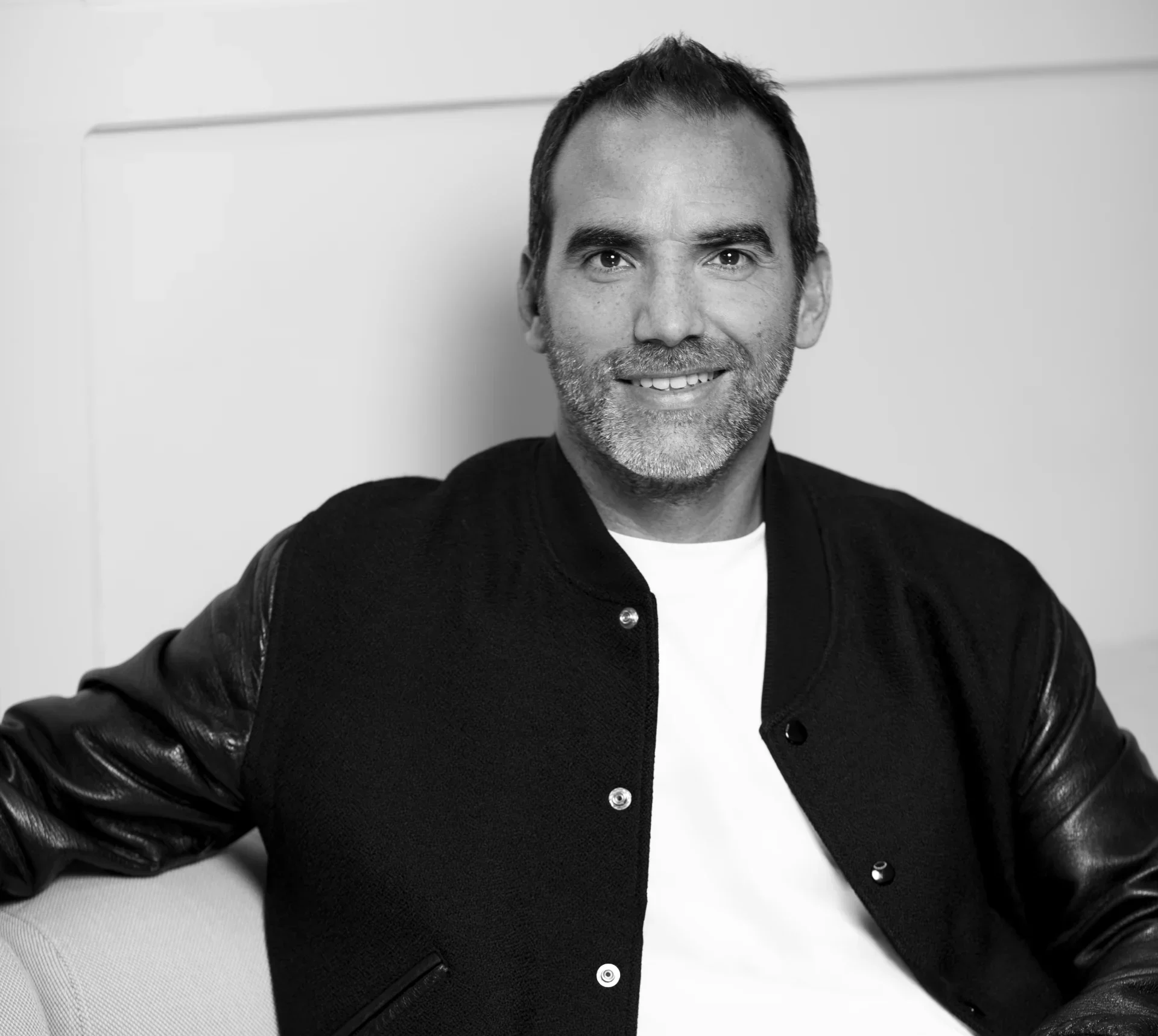
Featuring a photo of Geoffrey Perez, global head of Luxury at Snap
Luxury continues to exert its appeal, but something is changing in the way it is desired, discovered and purchased. Whereas once the value of a product was linked above all to its exclusivity and its ability to communicate social status, today more personal and emotional dimensions are coming into play. Consumers no longer want simply to own an iconic object: they want to know its story, experience the brand’s universe, identify with its values and share their choices with a circle of trusted people. It is a transformation that involves the entire purchasing journey, from initial inspiration to the final decision. Social media amplifies discovery, digital and physical experiences fuel engagement, while private conversations help consolidate trust. This scenario is captured by “The New Age of Luxury: Designing Desire in an Age of Paradox”, the international study conducted by Snap, WPP and Gruppo IFOP among a sample of 9,000 luxury consumers aged between 18 and 45, across nine global markets. The research identifies six paradoxes that are changing the codes of desirability and suggesting new ways for maisons to build relationships with their audiences.
Luxury is desired before it is even purchased
The first change concerns the relationship between desire and ownership. Today, it is possible to enter a maison’s universe through digital content, campaigns, collaborations, events and conversations, without necessarily purchasing a product. Luxury thus becomes a cultural experience, an imaginary world to explore and a world to feel close to. The figures confirm this evolution: 78% of respondents say they feel inspired by luxury and 76% recognise that social media can bring them closer to this universe. At the same time, 65% believe that the sector has lost some of its exclusivity. This is where the first paradox emerges: becoming more accessible culturally without becoming less exclusive in terms of value. For brands, the challenge is to broaden opportunities for contact with audiences while preserving the rarity, identity and authenticity that make a maison recognisable.
From status symbol to expression of identity
The second paradox concerns the very meaning of luxury. The desire to stand out does not disappear, but takes different forms. Ostentation is gradually giving way to the pursuit of a personal experience, capable of expressing individual tastes, sensibilities and values. People do not buy solely to show what they own, but also to celebrate an achievement, indulge themselves or choose something they identify with.
77% of consumers surveyed believe that luxury is evolving from a publicly displayed status symbol into a more personal and meaningful experience. 74% say that appearances matter less today than the feeling of being understood. 40% associate luxury with the opportunity to enjoy moments of happiness, while 34% see it as a way to express identity and style.
For maisons, this means going beyond simply presenting the product. It becomes essential to build a narrative universe in which every consumer can find a personal meaning, an emotion or an element of their identity.
Desire is built over time: anticipation becomes value
In the new luxury landscape, the moment of purchase is no longer the only high point of the experience. Desire develops progressively, through a succession of contacts, discoveries and interactions. A product may be seen on social media, explored through the brand’s content, shared with friends and later rediscovered in a boutique. Each step helps strengthen interest and turn initial curiosity into an informed choice.
According to the research, 79% of respondents believe that brief but frequent interactions with a brand fuel desire more effectively than high-impact but occasional campaigns. 39% of luxury goods buyers interact with a product at least four times before purchasing it.
Anticipation also takes on a strategic role: 79% consider the time between a product’s presentation and its launch to be an element capable of increasing its perceived value. For 73%, moreover, a product worth waiting for can justify a higher price than one that is immediately available.
It is not simply a question of limited availability, but of building anticipation. 63% say they appreciate a purchase more when they have had time to reflect and choose carefully. Finally, 68% say they feel more inclined to purchase when a designer they follow recommends a luxury product.
The new strategy therefore depends on the ability to keep attention alive, giving consumers meaningful opportunities to engage with the brand throughout the customer journey.
Tradition and innovation: maisons’ heritage is renewed
History, craftsmanship and savoir-faire continue to be essential elements of luxury. But preserving heritage does not mean leaving it unchanged. New generations want to understand what makes a creation exceptional, discover the processes that determine its value and grasp how maisons are evolving.
A significant figure demonstrates this: 80% of respondents say that knowing the history, craftsmanship and work behind an iconic product increases their desire to own it.
In this context, technology can also become a tool for enhancing heritage. Augmented reality, for example, makes it possible to explore the details, materials and characteristics of creations through immersive formats, offering new ways of interpreting luxury icons.
As Geoffrey Perez, global head of Luxury at Snap, points out, technology can open up new opportunities for brands when placed at the service of creativity, helping to preserve what makes them unique: craftsmanship excellence, heritage and the ability to inspire. The point, therefore, is not to choose between tradition and innovation, but to use the latter to make maisons’ heritage increasingly relevant and accessible to new forms of experience.
True influence comes from trusted circles
Social media makes desires, trends and aspirations visible, but the most important purchasing decisions often continue to mature away from the public sphere. A product may capture attention on a digital platform and become the subject of a private conversation, a message sent to a friend or a discussion with a family member. It is in these spaces that interest can turn into conviction. Before making an important choice, people seek honest opinions, reassurance and viewpoints they trust.
The research shows that 54% of consumers consider private conversations with friends and family to be among the main factors influencing luxury purchases. One in two consumers shares a product that has caught their attention via private messages, while 81% say that the opinions of trusted people strengthen their conviction that they have made the right choice.
It is therefore unsurprising that 41% prefer private messages to obtain more honest opinions and 40% choose to limit their interactions to people they trust. A new perspective is opening up for brands: reaching a broad audience is not enough; they need to enter the conversations that really matter. Communities, authentic relationships and shared values thus become an integral part of building desirability.
Immersive experiences and augmented reality: luxury becomes something to experience
The sixth paradox concerns the relationship between physical experience and digital innovation. Luxury is no longer simply something to observe and admire, but a universe to experience through events, services, places and increasingly personalised forms of interaction. The boutique retains its central role, but the discovery journey extends far beyond the physical space. Immersive technologies make it possible to get closer to creations, try them virtually and share them before proceeding with a purchase. Augmented reality is particularly interesting in this respect, because it helps reduce the distance between imagination and a concrete choice.
78% of respondents place greater value on the opportunity to experience a luxury brand through events, services or physical spaces than on simply observing a product. 71% believe that augmented reality experiences and virtual try-on can turn interest into immediate desire, while 66% appreciate the opportunity to try luxury products virtually.
Once again, sharing plays a role: 74% say that, after trying a product virtually, they would be more likely to show it to friends and family to gather their opinions. Technology therefore does not replace the boutique experience, but complements it, creating a link between digital discovery, personalisation and direct contact with the product.
Creators, experts and artificial intelligence: who guides choices?
Alongside the six paradoxes, the study also explores the role of different sources of influence in purchasing decisions. Content creators help identify trends and make brands relevant in digital conversations, but the authority of experts and specialist media remains important.
29% of consumers identify luxury experts, journalists and specialist media as their main reference point when making choices, compared with 20% who cite content creators. The same dynamic can also be seen among Generation Z, where experts and specialist media reach 29%, compared with 24% for creators.
The data on artificial intelligence is also interesting, with its influence varying significantly from market to market. In the Middle East, 36% of respondents consider AI tools a relevant factor in their luxury choices, a percentage close to the 38% who rely on recommendations from friends and family. In Europe, by contrast, reliance on AI stands at 16%, compared with 34% who attach greater importance to people in their trusted network.
The picture is of a complex ecosystem in which inspiration, expertise, technology and personal relationships coexist and complement one another. No single voice appears to be sufficient: desirability arises from the meeting of different forms of authority and engagement.
The future of luxury lies in the ability to nurture desire
The six paradoxes identified by Snap, WPP and Gruppo IFOP describe a sector that is redefining its relationship with consumers. The value of a creation no longer depends solely on its material exclusivity, but also on the universe of experiences, emotions and relationships surrounding it.
For maisons, the challenge is to find a balance between visibility and exclusivity, heritage and innovation, inspiration and trust. They need to build narratives capable of engaging audiences, offer memorable experiences and maintain an ongoing dialogue with increasingly informed and conscious consumers. As David Rusli, cso of WPP Media US, points out, today it is not simply about being noticed, but about creating the conditions for desire to take shape and consolidate over time.
Perhaps this is the most significant change in the new era of luxury: being desirable is no longer enough; brands must know how to fuel desire. And to do so, it is not enough to show a product. They must tell its story, bring its experience to life and build authentic relationships around it. Because true luxury today begins long before the purchase.