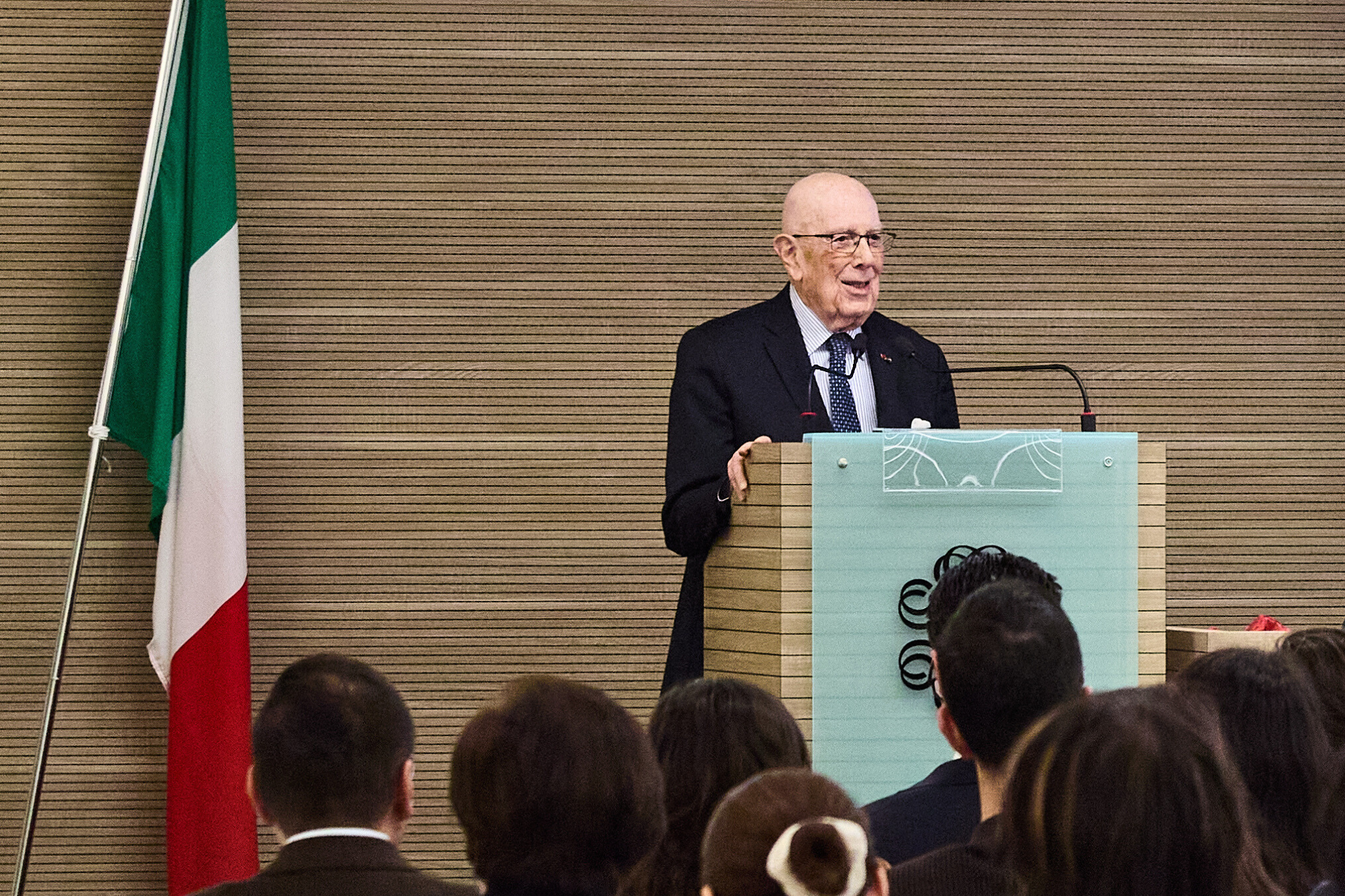
At the Milan headquarters of the Bank of Italy, kindly made available by Director Giorgio Gobbi, the traditional annual breakfast organized in collaboration with the Demetra Association took place, an event dedicated this year to the analysis of the international geoeconomic situation.
At the center of the meeting was the growing weight of the protectionist policies adopted by the US administration and the strategic role of China in global economic balances. A discussion that brought together economists, entrepreneurs, and institutional representatives to deepen the commercial and financial dynamics that are reshaping international scenarios.
The role of Demetra in supporting the economic ecosystem
Opening the proceedings were David Berera and Marco Magarelli, respectively President and Vice President of the Demetra Association, who emphasized how the sharing of economic analysis and international scenarios represents one of the pillars of the association’s activities.
Demetra, in fact, operates with particular attention to supporting Italian start-ups, promoting opportunities for dialogue between the business world, institutions, and economic analysts to foster the growth and competitiveness of the national production system.
The Chinese perspective in the current global context
Providing an in-depth analysis of the Asian context was Mario Boselli, President of the Italy China Council Foundation, who illustrated how Beijing is facing the current phase of geopolitical and commercial uncertainty.
According to Boselli, in response to the US tariffs, China has reacted with equivalent countermeasures, aiming to protect its economic interests and defend one of the pillars of its growth model: exports.
During the intervention, three key elements of the Chinese economy in 2025 were highlighted: the persistent weakness of domestic consumption, the historical record of trade surplus, amounting to $1.2 trillion towards the rest of the world, and the restructuring of trade routes, with a -20% decrease in exports to the United States, offset by a growth of +8.4% towards Europe and +13.4% towards ASEAN countries.
These data show how China is progressively diversifying its reference markets, strengthening economic relations with new strategic areas.
In his speech, Boselli also drew attention to the upcoming 2026-2030 Five-Year Plan, which will guide the country’s development in the coming years. The key words that emerged during the Beijing Two Sessions clearly indicate the strategic priorities of the Chinese leadership: high-quality growth, technological and scientific self-sufficiency, and improvement of the population’s well-being.