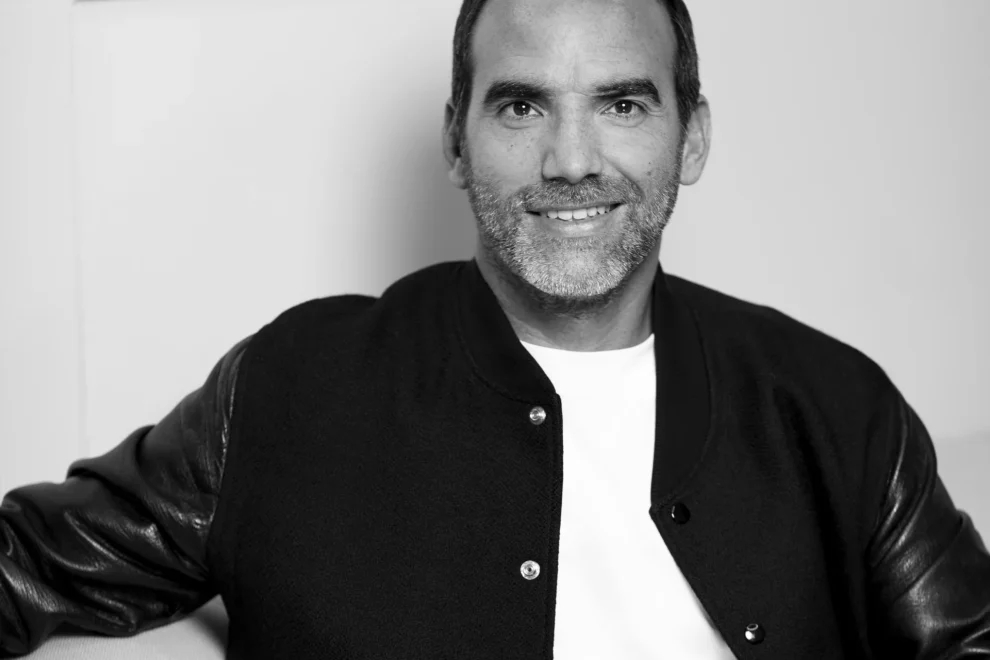
The first semester of 2026 tells a story of Salvatore Ferragamo in a phase of progressive consolidation. The Group, led by Leonardo Ferragamo and based in Florence, closed the first six months of the year with revenues of 468 million euros, up by 1.9% at constant exchange rates, while the Direct-to-Consumer (DTC) business recorded an increase of 6.1% at constant exchange rates. It is above all the quality of the performance that marks the semester. The improvement in profitability, the higher incidence of full-price sales, and cost discipline indicate an evolution of the strategy that focuses less on volume growth and more on the quality of the business. 
A second quarter that confirms the trend
In the second quarter, consolidated revenues reached 259 million euros, with a growth of 2.4% at current exchange rates and 4.6% at constant exchange rates compared to the same period in 2025. Once again, the DTC is the protagonist, increasing by 6.6% at constant exchange rates, with all regions showing growth. Particularly significant is the contribution of the primary channel, supported by the improvement in conversion rate, units per transaction, and average receipt. Online sales also continue to show encouraging signs, with double-digit growth in the quarter and an increase in traffic and average order value on the Ferragamo website. The Wholesale, on the other hand, remains subject to more selective management: in the second quarter, sales remained essentially stable at constant exchange rates (+0.2%), while in the semester they recorded a contraction of 11.2%. A dynamic consistent with the Group’s choice to prioritize a more controlled and brand-aligned distribution. 
North America driving growth
At a geographical level, the picture remains heterogeneous but shows some particularly strong signals. North America is the most dynamic market: in the second quarter, sales grew by 13.0% at constant exchange rates, while in the first semester the increase reached 15.4%. The growth affected both DTC and Wholesale, both showing double-digit growth at constant exchange rates in the semester. The performance of Central and South America is also positive, with a growth of 6.5% in the second quarter and 6.8% in the first six months at constant exchange rates. In EMEA, on the other hand, the second quarter shows an improvement in DTC, growing at high-single digits, but the overall result remains negative due to the weakness of Wholesale. In the semester, sales in the area decreased by 8.6% at constant exchange rates. Asia Pacific continues to be one of the main areas of focus. In the second quarter, DTC showed positive performance at constant exchange rates, but the overall result for the area remained slightly negative (-0.6%), while in the semester the contraction was 3.0%. Japan, finally, closed the second quarter with sales growth of 2.8% at constant exchange rates, supported by DTC, but the half-yearly data remains negative by 1.0%. 
Margins and profitability: the true progress of the semester
It is on the front of profitability that the most interesting signals emerge. The gross margin rose to 324 million euros, compared to 321 million in the first semester of 2025. The incidence on revenues increased from 67.7% to 69.2%, thanks mainly to the higher incidence of full-price sales and the increasing customer preference for higher value products. At the same time, operating costs benefited from efficiency and rationalization initiatives. The result is an EBITDA of 90 million euros, an increase compared to 73 million last year, with a margin increasing from 15.3% to 19.2%. Even more significant is the return to operating profit: the EBIT is positive for 21 million euros, compared to a negative adjusted figure of 3 million in the first semester of 2025. The net result also returns above the positivity threshold, reaching 1.5 million euros, compared to the adjusted negative 16 million in the same period last year. An improvement that mainly reflects greater operational efficiency and more rigorous cost management.
Less stock, more financial discipline
Even the asset management shows improvement. Net inventories have decreased to 277 million euros, a 10.3% reduction compared to 309 million in June 2025. Net working capital decreased by 9.8%, from 244 to 220 million euros. Investments, on the other hand, increased to 18 million euros, from 16 million the previous year, mainly for the renewal of the distribution network. The adjusted net financial position remains positive and reaches 125 million euros, an improvement compared to the 119 million recorded on June 30, 2025.
Product, retail, and communication at the center of the strategy
Twelve months after the start of strategic initiatives, Ferragamo continues to work on the foundations of the brand. The Group has indicated three main directions: product, retail, and communication. On the offering front, the company has further refined the product architecture, focusing on key categories and the most iconic elements of the brand. The goal is to make the offering more consistent and recognizable in different markets and touchpoints. In retail, the focus is on executive excellence, store productivity, and network quality. At the same time, communication is made more targeted, with initiatives designed to increase product visibility and strengthen the desirability of the brand. Wholesale, on the other hand, follows a selective logic, with greater attention to strategic customers and distribution coherence.
A more solid organization for the next phase
Another important piece concerns the managerial structure. In recent months, Ferragamo has substantially completed the strengthening of the management team, creating an organizational base considered necessary by the Group to support the execution of the strategy in the medium to long term. Some structural projects continue to impact the future customer experience and business efficiency: from e-commerce re-platforming to refining merchandising allocation criteria, to identifying targeted interventions to improve performance in individual markets, with particular attention to Asia.
The challenge now is to turn improvement into growth
The first semester of 2026 is not yet a point of arrival, but it offers Ferragamo a more solid foundation than twelve months ago. DTC is growing in all major areas, margins are improving, EBIT returns positive, and inventory management appears more disciplined. At the same time, the weakness of Wholesale and some geographical difficulties, especially in EMEA and Asia Pacific, show that the turnaround path is not yet complete. The direction indicated by the Group is clear: strengthening the desirability of the brand, improving the quality of distribution, and building a more efficient operational model, with a perspective oriented towards the medium to long term. In a luxury market still characterized by limited macroeconomic visibility, Ferragamo chooses to focus on the fundamentals. The first semester of 2026 suggests that the initiatives launched are beginning to translate into a more balanced and profitable performance. The next challenge will be to turn these signals into sustainable growth and value creation over time.