


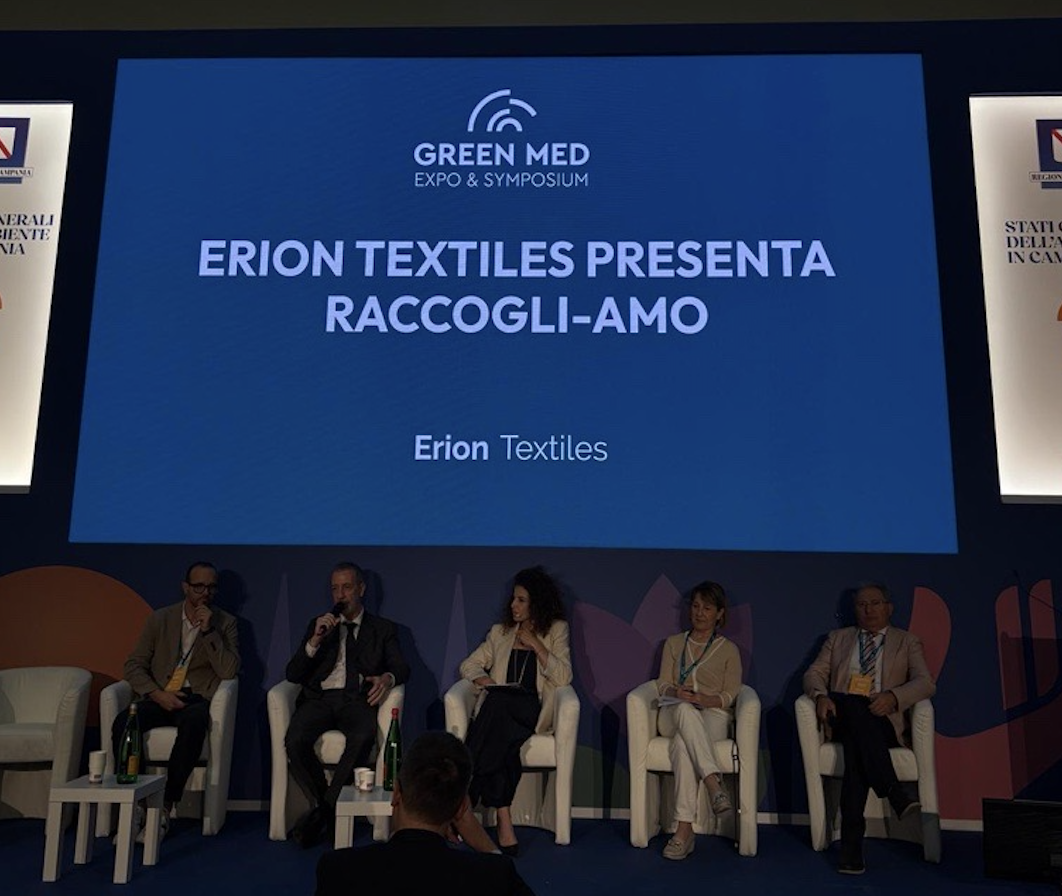
The management of textile waste enters a new phase, in which sustainability translates into concrete actions integrated into the everyday places of consumption. With the pilot project “Raccogli-Amo”, Erion Textiles is experimenting with an innovative model that brings the collection of discarded clothes and accessories directly into stores, transforming the point of sale into an active hub of circular economy.
In the traditional model, the disposal of no longer used items often requires an additional step by citizens, who must identify ecological islands or dedicated collection centers. With this initiative, instead, the gesture is simplified and brought closer to the moment of purchase, integrating naturally into the retail experience. The store thus becomes not only the place where new products are chosen, but also where what has completed its life cycle is returned. The initiative fits into the broader framework of circular economy applied to the textile sector, one of the sectors with the greatest environmental impact. The collected materials can be directed towards various recovery paths, from reuse to fiber-to-fiber recycling to other forms of valorization, thus reducing the reliance on traditional disposal and transforming waste into a resource.
A key element of the project is proximity, which is not only geographical but also functional. Bringing collection directly into stores means reducing the logistical and behavioral barriers that often limit the proper management of textile waste, making the gesture more immediate and easily integrated into daily habits.
“Raccogli-Amo” is designed as a pilot project to test the effectiveness of the model in the field, evaluating its impact in terms of participation and the ability to activate a more efficient recovery chain. The results of the experimentation could provide useful indications for a possible extension on a larger scale, contributing to redefining the role of retail in the transition towards sustainability. In this scenario, textile collection in stores represents a step towards a more accessible and concrete circularity, where sustainability is not an abstract concept but a simple, close gesture and an integral part of the consumption experience.


